
 Tool bags
 Tool Storage
 Made in USA
 Tool Bags By Trade
 Everyday Carry
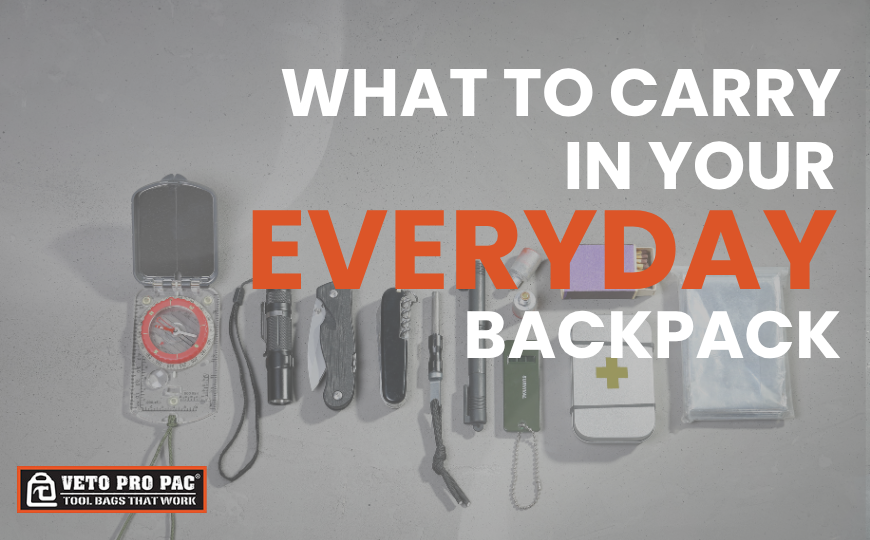
There’s a version of your daily carry that has too much in it and a version that has too little. Most guys bounce between the two. One week, you’re hauling a 30-pound bag with gear you haven’t touched since you put it in there. The next, you walk out the door with your phone and keys, only to realize at lunch that you forgot your charger, your laptop is at 8%, and the coffee you spilled on your shirt is there for the rest of the day.
A good EDC loadout sits in the middle. It’s the collection of items you carry every day that covers the situations you actually encounter, without turning your backpack into a storage unit. The goal isn’t to prepare for every possible scenario. It’s to handle the ones that come up regularly and handle them well.
Here’s how to build a loadout that works, organized by the categories that matter most for daily life.
The Non-Negotiable Core
These items go in every day, no exceptions. They’re the foundation that everything else builds on.
Laptop and Charger
If you work remotely, hybrid, or just need your computer at any point during the day, the laptop and its charger are the heaviest and most important items in your bag. They dictate what kind of backpack you need: a padded compartment that fits your screen size, ideally with a separate tablet sleeve so the two devices don’t rub against each other. A 20L backpack with a dedicated laptop compartment that fits up to 17 inches gives you enough room for the computer plus everything else on this list without the bag feeling oversized.
Wallet and Keys
The obvious ones, but how you carry them matters. A slim wallet reduces bulk in your pockets and transfers well to a quick-access pocket in your bag. Keys benefit from a low-profile key clip inside the bag so they don’t scratch your laptop or phone and you’re not digging through the main compartment to find them.
Phone
Your phone is your communication hub, camera, navigation tool, music player, and (increasingly) your wallet. It doesn’t need a dedicated bag pocket since it usually lives in your jacket or pants, but having a quick-access pocket in your bag for moments when you want it stowed is useful. Some bags offer RFID-blocking pockets that protect contactless cards and IDs from electronic skimming. If your bag has one, it’s a good place for your phone and wallet when you’re in crowded spaces like airports or public transit. For a deeper look at how RFID protection works, check out our breakdown on what RFID blocking actually does and whether you need it
The Tech Layer
After the core items, your tech accessories are where most of the daily frustration comes from. Dead batteries, tangled cables, and missing adapters derail more afternoons than people admit.
Power Bank
A 10,000mAh power bank gets you through a full day and charges most phones twice. It’s small enough to fit in a side pocket or tech organizer and heavy enough that you’ll notice when you forget it. Look for one with at least two output ports so you can charge your phone and earbuds at the same time.
Cables and Adapters
Carry one cable for your phone and one for your laptop. If your laptop uses USB-C and your phone uses the same, one cable might do both jobs. A small USB-C to USB-A adapter is worth throwing in for older peripherals or office monitors. The key is keeping cables organized rather than balled up at the bottom of your bag.
Tech Organizer
This is the single item that upgrades your carry the most. A dedicated tech case with elastic loops, structured compartments, and a clamshell opening lets you see everything at a glance instead of fishing through loose cables. The NORWALK Tech Case was designed specifically for this. It has four elastic charger cord loops, a gusseted pocket sized for a large power bank, three pen loops, a zippered compartment for charging blocks and larger cables, two stretch mesh pockets, and a removable tech pouch with its own zippered compartments. The clamshell design means you open it flat and grab what you need without pulling everything else out. At $64.99, it costs less than a single replacement laptop charger and keeps all of your cables, adapters, and small accessories in one place.
Earbuds or Headphones
Wireless earbuds in a hard case take up almost no space and serve multiple purposes: music during a commute, calls during a walk, or just blocking out a noisy coffee shop when you need to focus. Store them in your tech organizer or a small outer pocket where they won’t get crushed.
The Comfort and Preparedness Layer
These items aren’t technically required for work, but they prevent the small annoyances that accumulate over a day spent away from home.
Water Bottle
Staying hydrated sounds like a health poster cliche, but the alternative is buying a $5 bottle of water every time you get thirsty. An insulated bottle that fits in an external mesh or magnetic side pocket keeps it accessible and upright without eating into your main compartment space. If your bag’s side pockets can handle a 40 oz bottle, you won’t need to refill as often.
Sunglasses
A pair of sunglasses without a protective pocket is a pair of scratched sunglasses. If your backpack has an anti-scratch lined pocket near the top, that’s the ideal spot. Otherwise, a hard case works, though it takes up more room. This is one of those features that seems minor until you pull out your favorite pair and find a scratch across the lens from your keys.
Pen and Notebook
Not everything needs to be digital. A quality pen and a compact notebook handle quick notes, sketches, and lists faster than unlocking your phone and opening an app. Keep them in pen loops inside your tech organizer or in a dedicated front pocket where they’re easy to reach.
Reusable Bag
A packable grocery bag or tote weighs almost nothing and compresses to the size of a fist. It covers the unplanned errand on the way home when you need to grab a few things but don’t want to juggle plastic bags while wearing a backpack.
Basic First Aid and Personal Items
A few bandages, some pain reliever, a small tube of hand sanitizer, and a pack of tissues handle most minor situations. Add lip balm and a travel-size sunscreen if you spend time outdoors. These items barely take up space, and you’ll use them more than you think. Toss them in a small zippered pouch and forget about them until you need them.
The Seasonal and Situational Add-Ons
These rotate in and out depending on the weather, your plans, or your work setup.
Light Layer
A packable rain jacket or lightweight sweater handles temperature swings and surprise weather. If your bag has 20 liters of capacity, you can roll a lightweight jacket along the back panel without losing space for other gear.
Snack
A granola bar or a pack of nuts takes up almost no space and prevents the 3 PM decision to buy something overpriced from a vending machine. Rotate it out weekly so you’re not carrying a fossilized protein bar for three months.
Change of Shirt
If you commute by bike, walk in the heat, or have a habit of wearing your lunch, a rolled-up spare shirt at the bottom of your bag is cheap insurance. Roll it tight to minimize wrinkles and keep it in a thin packing bag so it stays clean.
Umbrella
A compact travel umbrella weighs a few ounces and fits along the side of your bag. Most people only remember they need one when they’re already wet.
How to Organize It All
The loadout only works if you can find things quickly. Dumping everything into one compartment defeats the purpose.
Assign zones. Laptop and documents go in the rear padded compartment. Tech accessories live in your tech organizer, which goes in the front compartment or the top of the main compartment for quick access. Your water bottle stays in an external side pocket. Daily grab items like your wallet, keys, and earbuds go in the most accessible pocket, ideally one with RFID protection.
Use the same pockets for the same items every time. Muscle memory matters. After a week of putting your power bank in the same spot, you’ll reach for it without looking. That small efficiency adds up across hundreds of daily interactions with your bag.
The bag itself has to support this kind of organization. A single-compartment drawstring backpack won’t cut it. You need distinct zones: a padded laptop compartment, a quick-access front pocket, side pockets for a water bottle, and internal organization for smaller items.
The NORWALK 20L Backpack is built around this kind of structured daily carry. The separate padded laptop compartment handles screens up to 17 inches. The thermoformed front compartment has a magnetic divider and an anti-scratch glasses pocket. The zippered magnetic side pockets fit bottles up to 40 oz (including the Stanley Quencher and Yeti Rambler) while doubling as storage for smaller EDC items. RFID-blocking front pockets protect your contactless cards. External attachment points and D-rings let you clip a carabiner or extra pouch. And the whole thing is built from recycled water-resistant 600D waxed polyester with a tarpaulin base that handles wet ground without soaking through. The NORWALK+ 20L upgrades to a thermoformed base and impact-resistant front compartment.
The Loadout at a Glance
Your daily EDC backpack should cover these categories: laptop and charger, wallet and keys, phone, power bank, cables and adapters, a tech organizer, earbuds, a water bottle, sunglasses, a pen and notebook, a reusable bag, and a small personal care kit. Add seasonal items as needed and strip them out when they’re not relevant.
The goal is a bag that’s ready when you walk out the door and stays organized through the day without you thinking about it. If you’re spending time looking for things inside your bag, either the loadout needs editing or the bag does.
For a wider look at what separates a bag that supports daily carry from one that fights it, read our guide on the anatomy of a great backpack and the 7 features that make or break your carry. And for help choosing the right organizer for your tech gear, see our roundup of the best everyday carry pouch organizers.