
 Tool bags
 Tool Storage
 Made in USA
 Tool Bags By Trade
 Everyday Carry
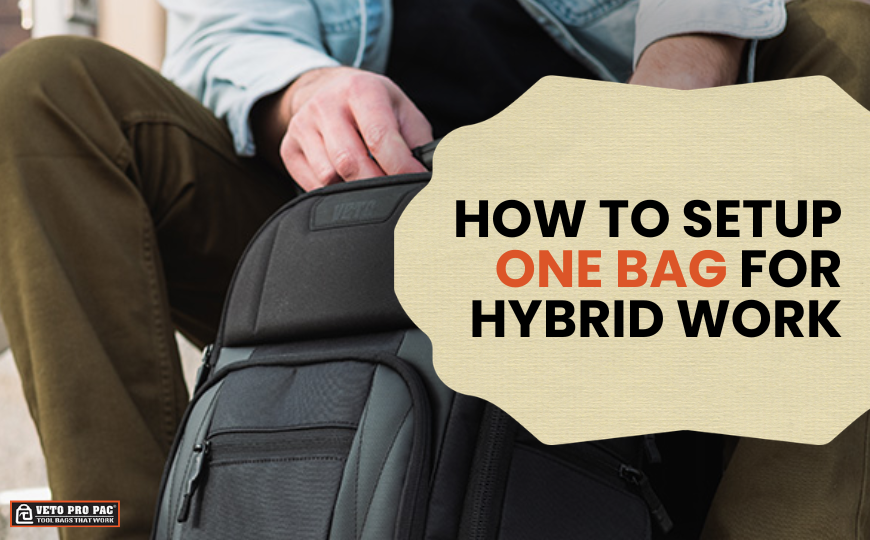
Hybrid work has killed the single-purpose bag for the average worker. On any given day, you might go from a morning workout to a client meeting to a coffee shop and back home, all without a stop at your apartment to repack. Carrying two bags is an option, but it is not a good one. Two bags means twice the weight, twice the things to keep track of, and one of them inevitably ends up shoved under your desk smelling like last Tuesday’s deadlift session.
The better approach is to set up a single bag that handles all of it. Not by cramming everything in and hoping for the best, but by building a system around compartments, separation, and a tight packing list. Here is how to do it.
Pick the Right Bag for Your Heaviest Day
The first decision is what kind of bag matches your typical week. Think about your most demanding day, the one where you are carrying the most gear, and size your bag for that.
If your gym sessions are light (a pair of shoes, shorts, a shirt, and a towel), a backpack with a separate laptop compartment handles the job. The NORWALK 20L Backpack gives you 20 liters of organized space, a padded compartment that fits up to a 17-inch laptop, RFID-blocking front pockets, and magnetic side pockets that hold a 40 oz water bottle. It stands upright on its own, which matters when you are setting it down at the gym or under a conference table.
If your workouts are heavier or you need to carry a full change of clothes plus shoes, a dedicated gym-to-office duffel makes more sense. The NORWALK+ 30L Active Duffel was built for exactly this scenario. It has 30 liters of capacity, a collapsible shoe compartment, a separate wipeable and water-resistant compartment for dirty clothes or toiletries, and two external mesh water bottle pockets. The flexible base fits into a gym locker, and the trolley handle pass-through clips onto luggage if you are catching a flight after work.
The Golden Rule: Separate Clean from Dirty
The fastest way to ruin a hybrid bag setup is to let dirty gym clothes touch your work gear. A sweaty shirt pressed against your laptop sleeve or a pair of used gym socks sitting next to your lunch is a problem you only tolerate once.
The fix is simple: create a hard boundary between your clean work items and your post-workout gear.
If your bag has a dedicated dirty compartment, toss your sweaty clothes in there after your workout, zip it shut, and the moisture and odor stay contained. Because the lining is water-resistant and easy to wipe down, it does not absorb smells over time.
If your bag does not have a built-in separator, use a waterproof stuff sack or a clean/dirty packing cube. These are inexpensive and available from most travel gear brands. Roll your used gym clothes tightly, seal them in the sack, and stash them in the bottom of your bag. At the end of the day, pull the sack out and drop it straight into the laundry.
One more thing: choose gym clothes made from quick-dry, moisture-wicking synthetic fabrics. They generate less odor than cotton and dry faster, which means less moisture trapped inside your bag.
Build a Permanent Base Layer
Your bag should have a set of items that live in it full-time. These are the things you need every day regardless of whether you are going to the office, the gym, or both. Packing them once and leaving them in the bag eliminates the most common failure mode of hybrid carry: forgetting something because you were rushing to swap gear at 6 AM.
Here is what stays in the bag permanently:
- Laptop and charger: Use the padded laptop compartment so they stay protected against everything else in the bag.
- Tech pouch: A small cable organizer with your wall charger, a USB-C cable, earbuds, and a power bank.
- Wallet, keys, and phone: Front pocket or RFID-blocking pocket.
- Water bottle: Magnetic side pockets or mesh pockets keep your bottle upright and accessible without taking up interior space.
- Deodorant and a small toiletry kit: A travel-size deodorant, face wipes, and a small towel or pack of body wipes. This kit stays in the bag year-round. If you are going gym-to-office without a shower, these items are the difference between walking into a meeting feeling presentable and hoping nobody stands too close.
Pack Your Gym Layer the Night Before
The variable portion of your bag is your gym gear. This changes based on the workout, the season, and whether you are heading to the office afterward. Lay out the following the night before and pack it into your bag as a single unit:
- Workout clothes: One shirt, one pair of shorts or leggings, one pair of socks, and underwear. Roll each item individually rather than folding. Rolling compresses the clothes into tighter bundles and reduces wrinkles, which matters if you are swapping back into work clothes later.
- Shoes: If your bag has a shoe compartment, use it. The NORWALK+ 30L Active Duffel’s collapsible shoe compartment keeps your trainers isolated from everything else. If you are using a backpack without a shoe compartment, wrap your shoes in a plastic bag or shoe dust bag and pack them against the bottom of the bag, soles facing the base.
- Post-workout cleanup kit: Body wipes, dry shampoo if needed, and a clean undershirt or dress shirt if you are going straight to the office. This is separate from your permanent toiletry kit. Think of it as the “transition kit” for days when there is no shower between the gym and your first meeting.
- Gym towel: A compact, quick-dry microfiber towel takes up a fraction of the space of a regular towel and dries in a few hours. If your gym provides towels, skip this entirely and reclaim the space.
- Lock: A small combination lock if your gym requires one for lockers. This is easy to forget and annoying to be without.
The Office Arrival Transition
The moment you get to the office is where most hybrid setups break down. You are sweaty, your bag is full, and you need to look put-together in 10 minutes. A repeatable routine makes this painless:
- Step 1: Pull your post-workout clothes and towel out of the main compartment and seal them in your dirty compartment or stuff sack immediately. Do not leave them loose.
- Step 2: Use your transition kit. Body wipes on your face, neck, and underarms. Apply deodorant. Dry shampoo if your hair needs it. Change into your clean work shirt.
- Step 3: Set up your workspace. Pull your laptop and tech pouch out and arrange them on your desk. Plug in your charger.
- Step 4: Stow the bag. Close all compartments, zip everything shut, and put the bag under your desk or in a locker. Because the dirty gear is sealed in its own compartment, the bag is not going to fill your workspace with gym smell.
The entire transition takes five to seven minutes once you have done it a few times.
Weekly Maintenance
A hybrid bag works harder than a single-purpose bag, so it needs a quick reset each week.
On Sunday night, you’ll want to reset. First, empty the entire bag, and pull out any trash, receipts, or forgotten items. Then check that your permanent base layer is intact: charger works, power bank is charged, deodorant is not empty, wipes are not dried out.
After everything is out, you’ll want to take care and wipe the interior. Use a damp cloth of lukewarm (not hot) water. For the main compartment, shake out any crumbs or debris and let it air out overnight.
If you’re low on any consumables, now is when you’ll want to restock. This means, replacing body wipes, refilling your travel deodorant, and swapping in fresh gym socks if you keep a spare pair in the bag.
Lastly, check your gym layer. Make sure your workout clothes for Monday are clean, rolled, and packed. Do not leave this for the morning.
One Bag, Every Day
The hybrid commute is not going away. Setting up one bag to handle it means less gear to manage, fewer things to forget, and a faster transition between the different parts of your day. Pick the right bag for your heaviest day, build a permanent base layer, separate clean from dirty, and assign every item a home.